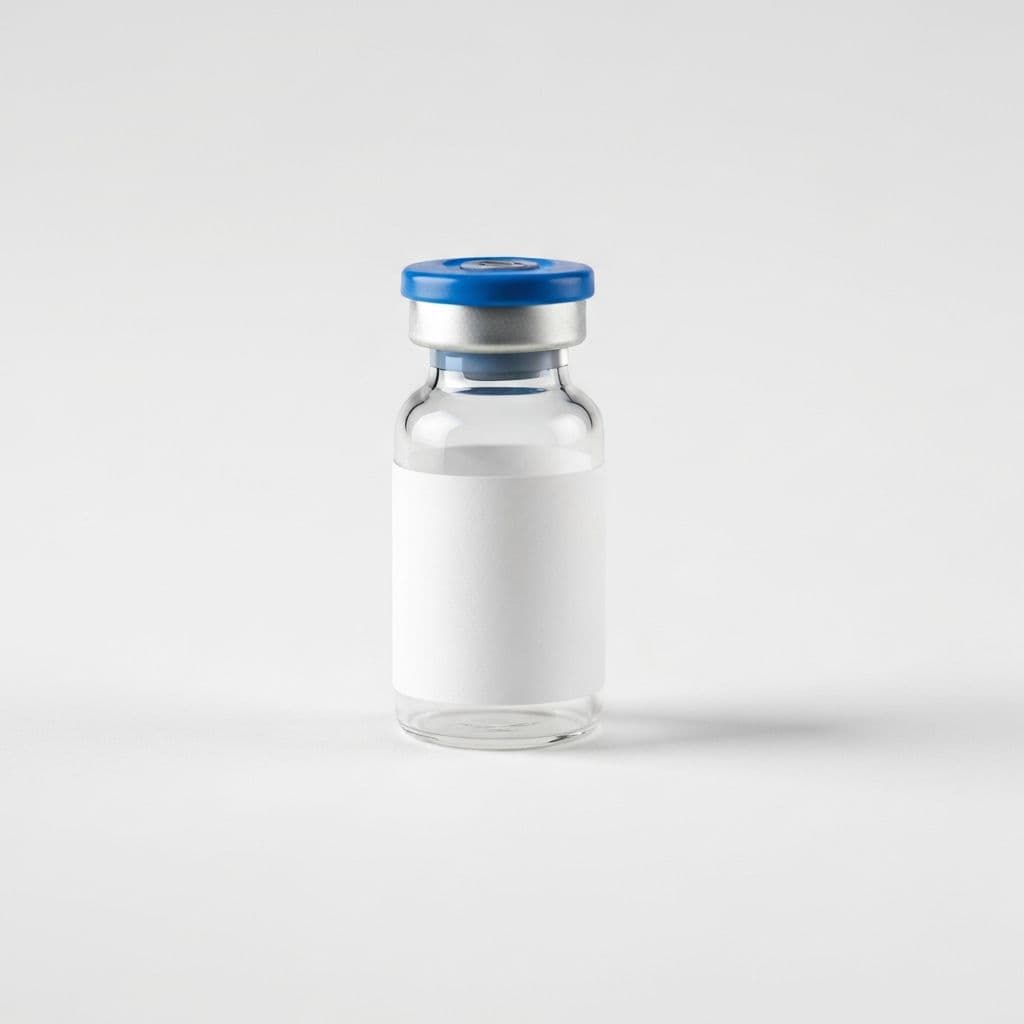
GLP-1SM
10mg · ≥99.4% Purity
Transparency
Certificate of Analysis
Every batch independently verified by third-party laboratories.
Batch #TL-2503
Analytical Formulations Inc.
All Trident Labs products are independently tested by accredited third-party laboratories. Results are batch-specific and provided for research transparency only. This product is not approved for human use.
The reference compound for GLP-1 research.
Semaglutide is the most extensively studied GLP-1 receptor agonist in peer-reviewed human trial literature. With 68-week Phase 3 data across 1,961 subjects and cardiovascular outcomes data in 17,604 patients, it is the benchmark compound against which GLP-1 class pharmacology is examined.
Wilding et al. STEP 1 — 68-wk Phase 3 RCT, N=1,961. All data sourced from independent peer-reviewed literature. For Research Use Only — Not for Human Consumption.
Published Research Data
68 weeks.
1,961 subjects.
STEP 1 is among the largest dedicated GLP-1 weight-loss trials published at time of reporting. All data cited exactly as they appear in peer-reviewed literature. Independent research findings — not Trident Labs claims.
-14.9%
Mean body weight change observed at 68 wks, 2.4 mg/wk vs placebo in STEP 1 Phase 3 trial.
Wilding et al., NEJM 2021 · Research findings
86.4%
Proportion of semaglutide-treated participants achieving ≥5% body weight change vs 31.5% placebo (STEP 1).
STEP 1, NEJM 2021 · Research findings
-20%
MACE event rate observed vs placebo in SELECT trial — HR 0.80 (95% CI 0.72–0.90). Non-diabetic CVD cohort.
Lincoff et al., NEJM 2023 · Research findings
17,604
SELECT trial enrollment — one of the largest GLP-1 cardiovascular outcomes trials by N at publication.
Lincoff et al., NEJM 2023
Dose-Response: Weight Reduction by Escalation Step
STEP 1 titration protocol · Weekly SC administration · Published % BW change from baseline
STEP 1 Phase 3 RCT · N=1,961 · Wilding et al., NEJM 2021. Approximate modeled values. Research use only.
Mechanism of Action
One receptor.
Fully characterized.
Unlike dual or triple agonists, semaglutide activates GLP-1R exclusively. Its selectivity (>10,000-fold over GIPR and GCGR) means that observed downstream effects in research models — including glucose metabolism, appetite, and cardiac endpoints — are attributable to a single receptor pathway, making it the most-cited reference compound for GLP-1 mechanism research.
GLP-1 Receptor (GLP-1R)
Insulin secretion (glucose-dependent) · Appetite suppression · Gastric emptying · Cardiac protection
EC50 0.4 nM
GIP Receptor (GIPR)
Not engaged — semaglutide is intentionally non-selective here
>10,000 nM
Glucagon Receptor (GCGR)
Not engaged — absence of GCGR activity distinguishes sema from GLP-3RT
>10,000 nM
Why single-receptor selectivity matters for research
Because semaglutide engages only GLP-1R, any observed effect in a research model can be attributed to that pathway with high confidence. Dual and triple incretin agonists produce signals across multiple receptors simultaneously, making mechanistic attribution more complex. Semaglutide's selectivity makes it the reference compound for isolating GLP-1 pathway effects in preclinical and pharmacology research.
GLP-1R downstream signaling cascade
GLP-1R Binding & Receptor Activation
Semaglutide binds GLP-1R with EC50 0.4 nM. The Aib8 substitution prevents DPP-IV cleavage. C18 fatty diacid chain creates reversible albumin binding, extending plasma half-life to ~168 hr versus 2 min for native GLP-1.
G-protein Coupling & cAMP Elevation
GLP-1R couples to Gs protein, activating adenylate cyclase. Intracellular cAMP rises, triggering PKA-mediated phosphorylation cascades in pancreatic beta-cells, hypothalamic neurons, cardiomyocytes, and gut epithelium.
Glucose-Dependent Insulin Secretion
cAMP elevation stimulates insulin exocytosis from beta-cells — strictly glucose-contingent. No insulin release occurs at euglycemic levels. This mechanistic gate explains the low hypoglycemia risk distinguishing GLP-1 agonists from sulfonylureas.
Hypothalamic Appetite Suppression
Central GLP-1R in the arcuate nucleus and nucleus tractus solitarius reduces NPY/AgRP signaling and increases POMC/CART activity. Blundell et al. (2017) demonstrated ~35% reduction in ad libitum energy intake in clinical subjects.
Gastric Emptying & Cardiac Effects
Peripheral GLP-1R slows gastric emptying, prolonging satiety and reducing postprandial glucose excursions. Cardiac GLP-1R activation reduces inflammation and may explain the MACE reduction observed in SELECT (HR 0.80) independent of weight loss.
Signaling cascade from published preclinical and clinical literature. Research use only.
Molecular Architecture
31 residues.
Three modifications.
Semaglutide's 31-residue backbone drawn residue-by-residue. The three key engineering sites — Aib8 (DPP-IV block), Lys26 (C18 acylation), and Arg34 substitution — illuminate as they appear in sequence.
Compound Comparison
Where GLP-1SM stands.
Peer-reviewed literature has examined semaglutide against older GLP-1 agents and next-generation dual agonists. It is the most-studied reference compound in the GLP-1 class. All findings from independent published research.
Scroll to see full table
| Compound | Mechanism | Half-life | Dosing | Peak %BW | CV Outcome | FDA Status |
|---|---|---|---|---|---|---|
| SemaglutideGLP-1R | Selective GLP-1R agonist | ~168 hr | Once weekly | -14.9% | ✓ SELECT, SUSTAIN 6 | ✓ Approved |
| TirzepatideDual | GLP-1R + GIPR dual agonist | ~120 hr | Once weekly | -20.9% | ✓ SURMOUNT-MMO | ✓ Approved |
| LiraglutideGLP-1R | Selective GLP-1R agonist | ~13 hr | Once daily | -8.0% | ✓ LEADER | ✓ Approved |
| DulaglutideGLP-1R | Selective GLP-1R agonist | ~90 hr | Once weekly | -3.0% | ✓ REWIND | ✓ Approved |
| ExenatideGLP-1R | Selective GLP-1R agonist | ~2.4 hr | BID injection | -2.4% | — Limited data | ✓ Approved |
%BW = mean change from baseline at highest studied dose in published peer-reviewed trials. Trial designs, populations, and durations differ significantly across compounds. Data from independent published literature — not Trident Labs claims. All products Research Use Only — Not for Human Consumption.
Receptor Selectivity Profile
Mono-selective.
By design.
Semaglutide's receptor engagement profile vs tirzepatide (dual agonist). GLP-1R selectivity >10,000-fold over GIPR and GCGR makes attribution of any observed downstream effect unambiguous. EC50 data from Lau et al. J Med Chem 2015.
Lau et al. J Med Chem 2015 · Willard et al. JCI Insight 2020. Higher score = stronger affinity. Research use only.
Pharmacokinetic Profile
168-hour half-life.
Engineered in.
Three structural modifications transform native GLP-1 (t½ ~2 min) into semaglutide (t½ ~168 hr). The C18 fatty diacid at Lys26 drives albumin binding; Aib8 blocks DPP-IV cleavage. Curve draws on scroll.
Compound Profile
Full specification
Molecular and pharmacological data from peer-reviewed literature and Trident Labs batch records. Three structural modifications engineered to solve the native GLP-1 half-life problem.
| Common Name | Semaglutide |
| Code | OzempicR / WegovyR (NN9535) |
| Class | Selective GLP-1R Agonist |
| Structure | 31-amino acid acylated GLP-1 analogue |
| Mol. Formula | C187H291N45O59 |
| Mol. Weight | 4,113.6 Da |
| EC50 at GLP-1R | 0.4 nM — high-affinity full agonist |
| EC50 at GIPR/GCGR | >10,000 nM — no meaningful activity |
| Plasma Half-Life | ~168 hours (7 days) via albumin binding |
| DPP-IV Resistance | Aib8 substitution — replaces Ala at position 8 |
| Acylation | C18 fatty diacid at Lys26 via mini-PEG linker |
| Acylation Lock | Arg34Lys substitution — single-site precision |
| CAS Number | 910463-68-2 |
| Developer | Novo Nordisk |
| FDA Approvals | Ozempic 2017 Wegovy 2021 |
| Trident Purity | ≥98% by HPLC — 6-panel COA every batch |
| Form | Lyophilized powder · sealed vial |
| Regulatory | Research Use Only — Not for Human Use |
Receptor Selectivity Profile
EC50 relative binding — GLP-1R precision by design. Near-zero activity at off-target receptors. Lower EC50 = higher potency.
EC50 data from Lau et al. (2015) J Med Chem. >10 μM indicates negligible receptor activity under standard cAMP assay conditions. Research use only.
Aib8 Substitution — DPP-IV Resistance
Alpha-aminoisobutyric acid at position 8 blocks DPP-IV cleavage at the Ala-Glu scissile bond — the primary mechanism that degrades native GLP-1 within 2 minutes of secretion. This single modification is the foundation of semaglutide's extended pharmacokinetics.
C18 Fatty Diacid at Lys26 — Albumin Binding
A C18 fatty diacid attached at Lys26 via a mini-PEG linker creates high-affinity reversible albumin binding (Kd ~0.1 μM). This dramatically slows glomerular filtration and extends plasma half-life from hours to ~168 hours, enabling once-weekly dosing in research models.
Arg34 Substitution — Acylation Site Control
Lysine at position 34 is substituted with arginine to prevent unintended acylation at that site. This confines the C18 chain exclusively to Lys26, producing a batch-consistent structural identity critical for reproducible research results.
Research Timeline
From discovery
to research standard.
Semaglutide has accumulated more peer-reviewed human trial data than any other GLP-1 receptor agonist — a research corpus built over a decade from structural characterization to large-scale CV outcomes trials.
Key Research Findings
STEP 1 (N=1,961): 14.9% mean body weight reduction at 68 weeks, 2.4 mg/wk — 86.4% of participants achieved ≥5% reduction vs 31.5% placebo (p<0.001).
Wilding et al., NEJM 2021
SELECT (N=17,604): 20% reduction in MACE (CV death, nonfatal MI, stroke) vs placebo in obese patients without T2D but with established CVD. HR 0.80 (95% CI 0.72-0.90), p<0.001.
Lincoff et al., NEJM 2023
SUSTAIN 6 (N=3,297): 26% reduction in primary CV composite (CV death, nonfatal MI, nonfatal stroke) vs placebo in T2D at high CV risk. Basis for Ozempic CV risk reduction labeling.
Marso et al., NEJM 2016
STEP 4 (N=803): Participants who continued semaglutide maintained -17.4% weight loss; those switched to placebo regained 6.9 percentage points by week 68 — demonstrating dependency of effect on ongoing treatment.
Rubino et al., JAMA 2021
SELECT Extension & Emerging Indications
Long-term SELECT extension ongoing. Active trials examining semaglutide in NASH/MAFLD (ESSENCE), Alzheimer's disease (EVOKE), alcohol use disorder, PCOS, and heart failure with preserved ejection fraction (HFpEF). Over 40 active registered trials globally.
SELECT: First GLP-1 CV Benefit Without Diabetes
Lincoff et al., NEJM 2023. N=17,604 adults with CVD, BMI ≥27, no T2D. Median follow-up 39.8 months. 20% MACE reduction (HR 0.80, p<0.001). Reshapes understanding of GLP-1R cardiac mechanisms as independent of glycemic effects.
STEP 1, 4, 5 & FDA Wegovy Approval
STEP 1: -14.9% BW, N=1,961. STEP 4: withdrawal rebound confirms ongoing-treatment dependency. STEP 5: 104-week durability data. FDA approves semaglutide 2.4 mg (Wegovy) for chronic weight management — first GLP-1 approved specifically for obesity.
Ozempic Approved for Type 2 Diabetes
FDA approves semaglutide 0.5 mg and 1.0 mg (Ozempic) for glycemic control in T2D. SUSTAIN 6 CV data incorporated into labeling — first GLP-1 with a CV risk reduction indication. Marks beginning of semaglutide's dominance as category standard.
SUSTAIN 6: CV Outcomes in T2D
Marso et al., NEJM 2016. N=3,297 T2D subjects at high CV risk. 104-week trial. Primary composite (CV death, nonfatal MI, stroke): semaglutide 6.6% vs placebo 8.9%, HR 0.74, p<0.001 for non-inferiority. Established cardiovascular safety ahead of approval.
Structural Characterization — J Med Chem
Lau et al., J Med Chem 2015. Full structural rationale for Aib8, C18 fatty diacid acylation at Lys26, and Arg34Lys substitution published. Provided the mechanistic basis for the ~168 hr half-life. Companion PK studies confirmed albumin binding as the dominant clearance mechanism.
First-in-Human Phase 1 & SUSTAIN Series Begins
Phase 1 dose-escalation confirmed tolerability and the 168-hr half-life predicted from PK modeling. SUSTAIN Phase 3 program launched across T2D sub-populations (SUSTAIN 1-6), enrolling over 8,000 subjects and providing the comprehensive safety database for NDA submission.
Storage & Handling
Maintain peptide
integrity.
Semaglutide is a 4.1 kDa acylated peptide. The C18 fatty diacid chain is stable under lyophilized storage but sensitive to freeze-thaw cycling after reconstitution. Follow protocol carefully.
Laboratory Reconstitution Reference
Standard laboratory procedure for research preparations. For qualified researchers only.
Equilibrate to ambient laboratory temperature
Remove lyophilized vial from -20°C storage and allow to equilibrate at room temperature for 15–20 minutes. Do not apply external heat sources. This prevents condensation inside the vial and avoids thermal shock to the peptide.
Add 2 mL bacteriostatic water
Using a calibrated laboratory syringe, draw 2 mL bacteriostatic water. Confirm volume precisely. BAC water (0.9% benzyl alcohol) preferred — benzyl alcohol provides antimicrobial protection extending reconstituted stability.
Direct along interior vial wall
Introduce solvent slowly along the interior glass wall — not directly onto the lyophilized cake. Slow, controlled delivery along the glass minimizes disruption to the peptide matrix and reduces foaming.
Roll gently to dissolve
Roll the vial slowly between palms for 30–60 seconds. Gentle swirling is acceptable. Do not vortex or apply mechanical stress — the C18 acylation makes semaglutide susceptible to surface-induced aggregation. Solution should be clear to slightly opalescent.
Inspect, label, and refrigerate
Visually inspect for particulate matter, cloudiness, or discoloration. Discard if present. Label with compound name, lot number, and reconstitution date. Transfer immediately to 2–8°C refrigerator. Do not freeze reconstituted material.
Indexed literature
9 key studies across STEP, SELECT, SUSTAIN, and mechanism research.
Once-Weekly Semaglutide in Adults with Overweight or Obesity — STEP 1
68-week randomized, double-blind trial. Once-weekly semaglutide 2.4 mg vs placebo in adults with BMI ≥30 (or ≥27 with weight-related comorbidity) without T2D. Primary endpoint: % change in body weight at week 68. Mean reduction 14.9% (semaglutide) vs 2.4% (placebo); estimated treatment difference -12.4 pp (p<0.001). 86.4% of semaglutide participants achieved ≥5% reduction vs 31.5% placebo. GI adverse events most common (nausea 44.2%), mostly mild-moderate, transient, peaked at dose escalation.
Semaglutide and Cardiovascular Outcomes in Obesity without Diabetes — SELECT
Multicenter, double-blind, randomized trial. Semaglutide 2.4 mg/wk vs placebo in adults with pre-existing CVD, BMI ≥27, without T2D. Median follow-up 39.8 months. Primary endpoint: first occurrence of CV death, nonfatal MI, or nonfatal stroke. HR 0.80 (95% CI 0.72-0.90), p<0.001. Absolute risk reduction 1.5 percentage points. First GLP-1 agonist to demonstrate MACE reduction in a population with no diabetes, implicating a cardiac mechanism beyond glycemic control.
Discovery of the Once-Weekly GLP-1 Analogue Semaglutide
Reports the complete medicinal chemistry rationale for the three structural modifications distinguishing semaglutide from native GLP-1: (1) Aib8 substitution preventing DPP-IV cleavage at the Ala-Glu bond; (2) C18 fatty diacid attached at Lys26 via a mini-PEG linker conferring high-affinity albumin binding; (3) Arg34Lys substitution preventing unintended acylation. Resulting molecule: EC50 0.4 nM at GLP-1R, >10,000-fold selectivity over GIPR and GCGR, plasma half-life ~168 hours in human PK modeling.
Semaglutide and Cardiovascular Outcomes in Patients with Type 2 Diabetes — SUSTAIN 6
104-week randomized trial in T2D patients at high CV risk. Primary composite: CV death, nonfatal MI, nonfatal stroke. Semaglutide 6.6% vs placebo 8.9%, HR 0.74 (95% CI 0.58-0.95), p<0.001 for non-inferiority, p=0.02 for superiority. HbA1c reduction 1.1 pp (0.5 mg) and 1.4 pp (1.0 mg). Formed the basis for FDA CV risk reduction labeling for Ozempic and the CV safety database used for approval.
Effect of Continued Weekly SC Semaglutide vs Placebo on Weight Loss Maintenance in Adults with Overweight — STEP 4
All participants received semaglutide 2.4 mg for 20 weeks (run-in), then randomized to continued semaglutide or placebo for 48 weeks. Continued semaglutide: additional -7.9% from week 20; placebo (withdrawal): +6.9% regain. Demonstrates ongoing treatment dependency of semaglutide weight loss effect — critical mechanistic finding for research models examining treatment discontinuation protocols.
Effects of Once-Weekly Semaglutide on Appetite, Energy Intake, Energy Expenditure and Body Composition
Randomized crossover mechanistic trial. Semaglutide 1.0 mg/wk vs placebo. Primary outcome: ad libitum energy intake at a standardized meal. Semaglutide reduced ad libitum energy intake by 35% vs placebo. Also reduced hunger (appetite VAS), food cravings, and increased satiety. No significant effect on resting energy expenditure, confirming appetite suppression as the primary weight-loss mechanism rather than thermogenesis.
Semaglutide versus Dulaglutide Once Weekly in Type 2 Diabetes — SUSTAIN 7
First direct head-to-head RCT of semaglutide vs dulaglutide in T2D. N=1,201. Semaglutide 0.5 mg superior to dulaglutide 0.75 mg: HbA1c -1.5% vs -1.1% (ETD -0.40 pp, p<0.0001); BW -4.6 vs -2.3 kg. Semaglutide 1.0 mg superior to dulaglutide 1.5 mg: HbA1c -1.8% vs -1.4% (ETD -0.41 pp, p<0.0001); BW -6.5 vs -3.0 kg. Confirmed superior efficacy at both dose pairs.
Comparative Effectiveness of GLP-1 Receptor Agonists on Weight and Glycaemic Outcomes: Network Meta-Analysis of 45 RCTs
Systematic review and network meta-analysis of 45 RCTs, N=40,521 participants, covering all approved GLP-1 receptor agonists. Semaglutide (weekly) ranked highest for body weight reduction among GLP-1 monoagonists and second overall (after tirzepatide). Also ranked highest for HbA1c reduction in T2D populations. Semaglutide demonstrated superior tolerability profile to exenatide and dulaglutide. Confirms semaglutide as the reference standard against which all GLP-1 class agents are compared.
Cardiovascular and Renal Outcomes with Semaglutide in Type 2 Diabetes — SUSTAIN 6 Long-Term Follow-Up
Extended follow-up analysis examining cardiovascular and renal outcomes from SUSTAIN 6. Semaglutide showed 36% reduction in new or worsening nephropathy (HR 0.64, p=0.005). eGFR decline was attenuated. Renal benefit appears independent of glycemic control, suggesting direct GLP-1R effects on glomerular endothelium and mesangial cells. These findings informed subsequent SELECT renal endpoint analyses and ongoing semaglutide CKD trials.
Indexed from PubMed and peer-reviewed journals. Independent published research — not Trident Labs claims. GLP-1SM (Semaglutide) is for Research Use Only — Not for Human Consumption. Not a drug, food, dietary supplement, cosmetic, or medical device. Not intended to diagnose, treat, cure, or prevent any disease. For lawful laboratory research use only by qualified researchers.
Cited Sources
References
All scientific claims sourced from peer-reviewed literature or official regulatory records.
Once-Weekly Semaglutide in Adults with Overweight or Obesity
Semaglutide and Cardiovascular Outcomes in Obesity without Diabetes
Discovery of the Once-Weekly Glucagon-Like Peptide-1 (GLP-1) Analogue Semaglutide
Semaglutide and Cardiovascular Outcomes in Patients with Type 2 Diabetes
Effect of Continued Weekly Subcutaneous Semaglutide vs Placebo on Weight Loss Maintenance in Adults with Overweight — STEP 4
Effects of Once-Weekly Semaglutide on Appetite, Energy Intake, Energy Expenditure and Body Composition
Semaglutide versus Dulaglutide Once Weekly in Type 2 Diabetes — SUSTAIN 7
Benefits and Harms of Drug Treatment for Type 2 Diabetes — Network Meta-Analysis of 45 RCTs
Cardiovascular and Renal Outcomes with Semaglutide in Type 2 Diabetes
Support
Frequently Asked Questions
Everything you need to know about this product and your order.